

Since 2012 · Nepal
Buildings made of the ground they stand on.
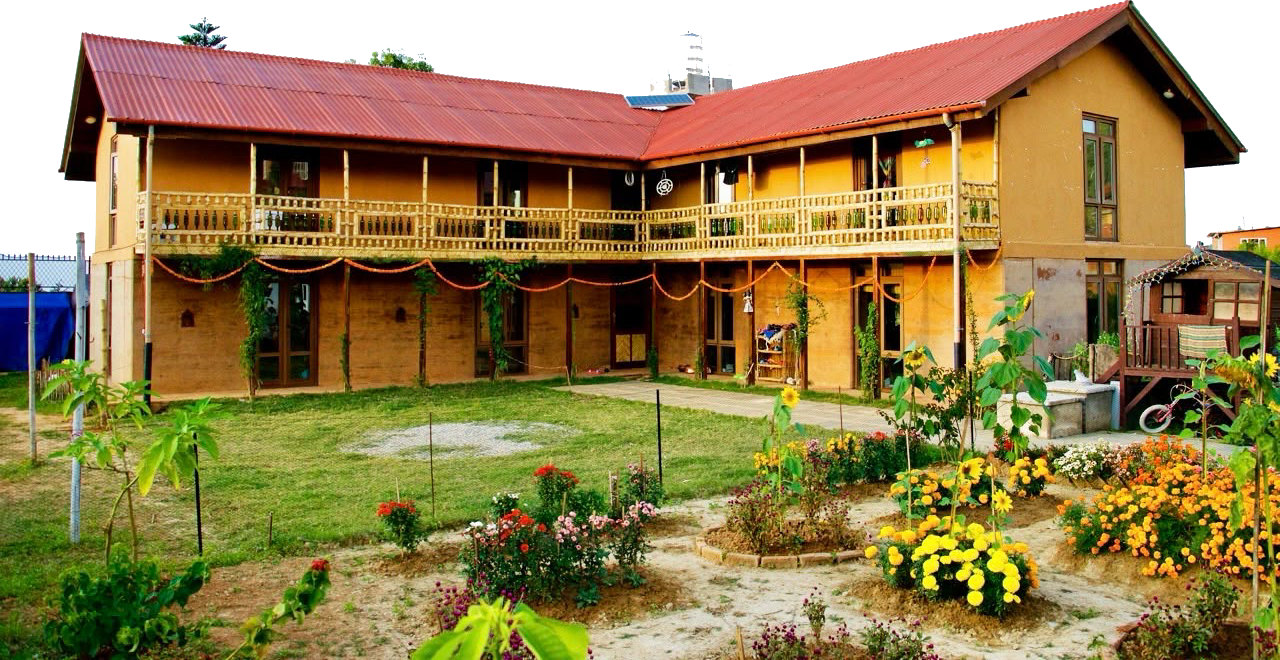
For more than a decade we have built with rammed earth across Nepal — from the mountains and hills to the valleys and Terai. Homes, schools, hospitals, farms and community buildings.
Projects
Buildings
Years
Our portfolio
Selected Projects
Showing 6 projects
Manavsewa Ashram – Jhapa, Dhangadhi and Lamjung
We contributed to facilities that provide safe and dignified accommodation for people needing shelter, care and rehabilitation. The collaboration shows how natural construction can support compassionate social service.…
WFP Healthy School Kitchen, Jumla
With support from the United Nations World Food Programme, we constructed a durable rammed-earth kitchen in Tatopani, designed for safe meal preparation and thermal comfort in a high-altitude…
ICIMOD Eco-Homes, Godavari
At ICIMOD's Living Mountain Lab, we contributed to two-storey rammed-earth eco-homes demonstrating passive thermal design, natural ventilation, rainwater management and resource-efficient construction. Website: ICIMOD Living Mountain Lab
Tiger Track, Thakurdwara
Located near Bardiya's wildlife landscape, this earthbag and natural-building project supports nature-based tourism rooted in the environment and culture of western Nepal.
Hokkaido Ramen House, Budhanilkantha
Rammed Earth Solutions contributed oil finishing and related construction work to Hokkaido Ramen House in Budhanilkantha. The work supported a warm, durable and welcoming environment for this Japanese…
Swara Retreat – Astam, Pokhara
Located in the hills above Pokhara, Swara Retreat is a yoga and wellness destination developed by Ganesh Upadhyay and IiLing Loo. Rammed Earth Solutions contributed technical expertise, skilled…
Recognition · 2025
Top 10 in the world for environmental action.
Kopila Valley School in Surkhet was selected among the world’s Top 10 finalists for the World’s Best School Prize for Environmental Action — the first school from Nepal to achieve this recognition. Rammed Earth Solutions provided technical support for the rammed earth construction, demonstrating how local earth, local skills and modern sustainable design work together.
How we build
Local materials, modern engineering
Materials
Wherever possible we use locally available earth, stone, bamboo, timber and other natural materials, combining local knowledge with modern engineering to create safe, durable and climate-responsive buildings.
Systems
- Natural ventilation and daylight
- Rainwater harvesting
- Groundwater recharge
- Wastewater management
- Biogas
- Solar energy
Beyond the buildings
By working with local communities and craftspeople, we support the development of local skills, knowledge and employment in natural construction — while encouraging greater use of locally available materials and reducing unnecessary transportation.
Where it began
It started with one house.
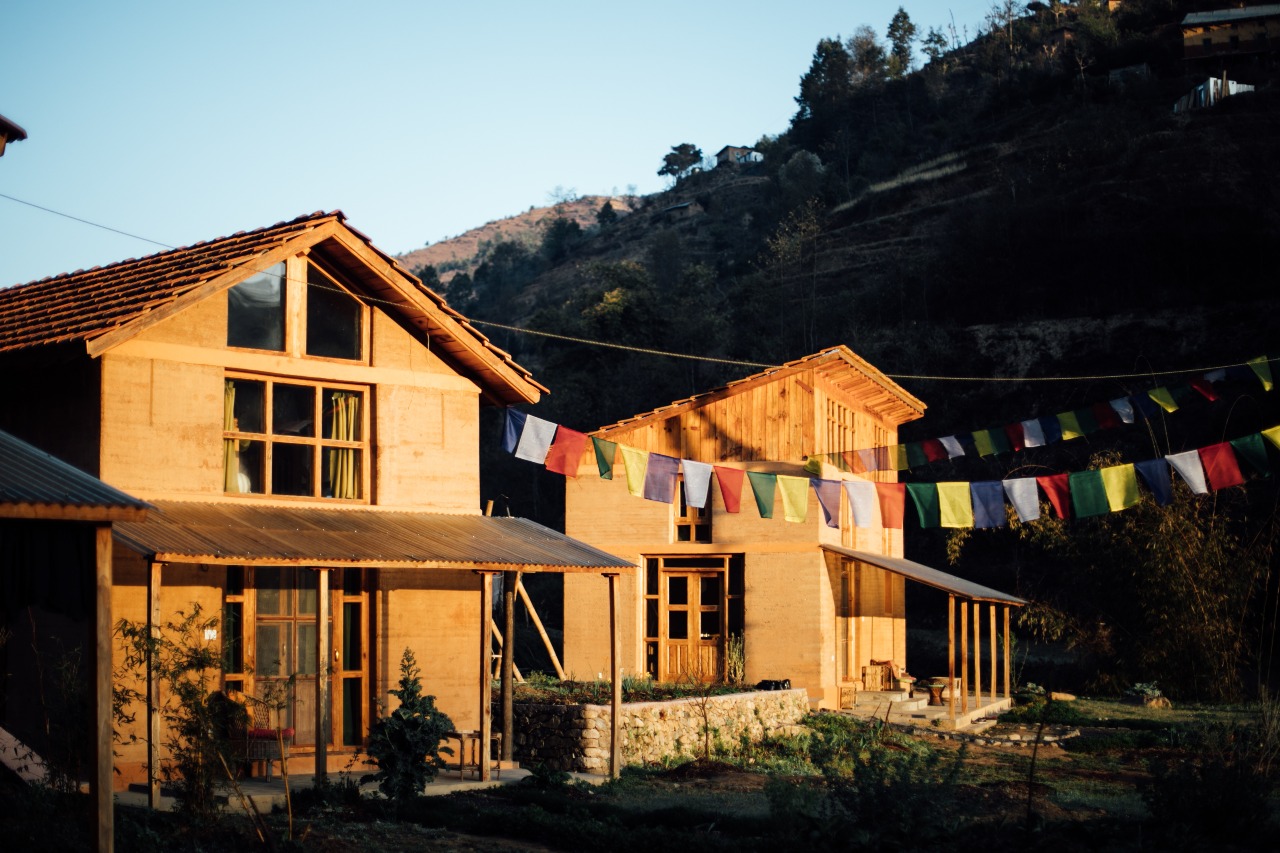
In 2012 our founder, Narayan Acharya, built a two-storey rammed earth house in Godawari, Lalitpur, as a home for his own family — to demonstrate that natural materials can produce homes that are beautiful, durable, comfortable and environmentally responsible. It became the first project of Rammed Earth Solutions Pvt. Ltd. and the beginning of Nepal’s modern rammed earth movement.
Every great journey begins with a single step. This house was ours—and it became the foundation of Nepal’s modern rammed earth movement.
Who we worked with
Partners and collaborators
Common questions
Learn more about rammed earth
Why is rammed earth sustainable?
Rammed earth uses local soil, minimal concrete, and produces fewer emissions compared to bricks and cement, making it an eco-friendly building technique.
Are rammed earth buildings earthquake-resistant?
Yes, rammed earth structures are highly earthquake-resistant when constructed properly, unlike traditional brick and mud mortar buildings that collapsed in Nepal's 2015 earthquake.
Why isn’t rammed earth common?
Misconceptions about mud strength and building code limits of two and a half stories make rammed earth less popular, especially in urban areas like Kathmandu.
What benefits do rammed earth provide?
Rammed earth structures offer thermal insulation, weather resistance, and sustainability with features like water recycling and biogas systems, while preserving traditional architectural styles.
Our People
Who we are
Narayan Acharya
Dr. Naomi Saville
Mangal Prasad Chaudhary
Good for people. Good for earth.
Tell us about your site, your climate and what you want to build.